
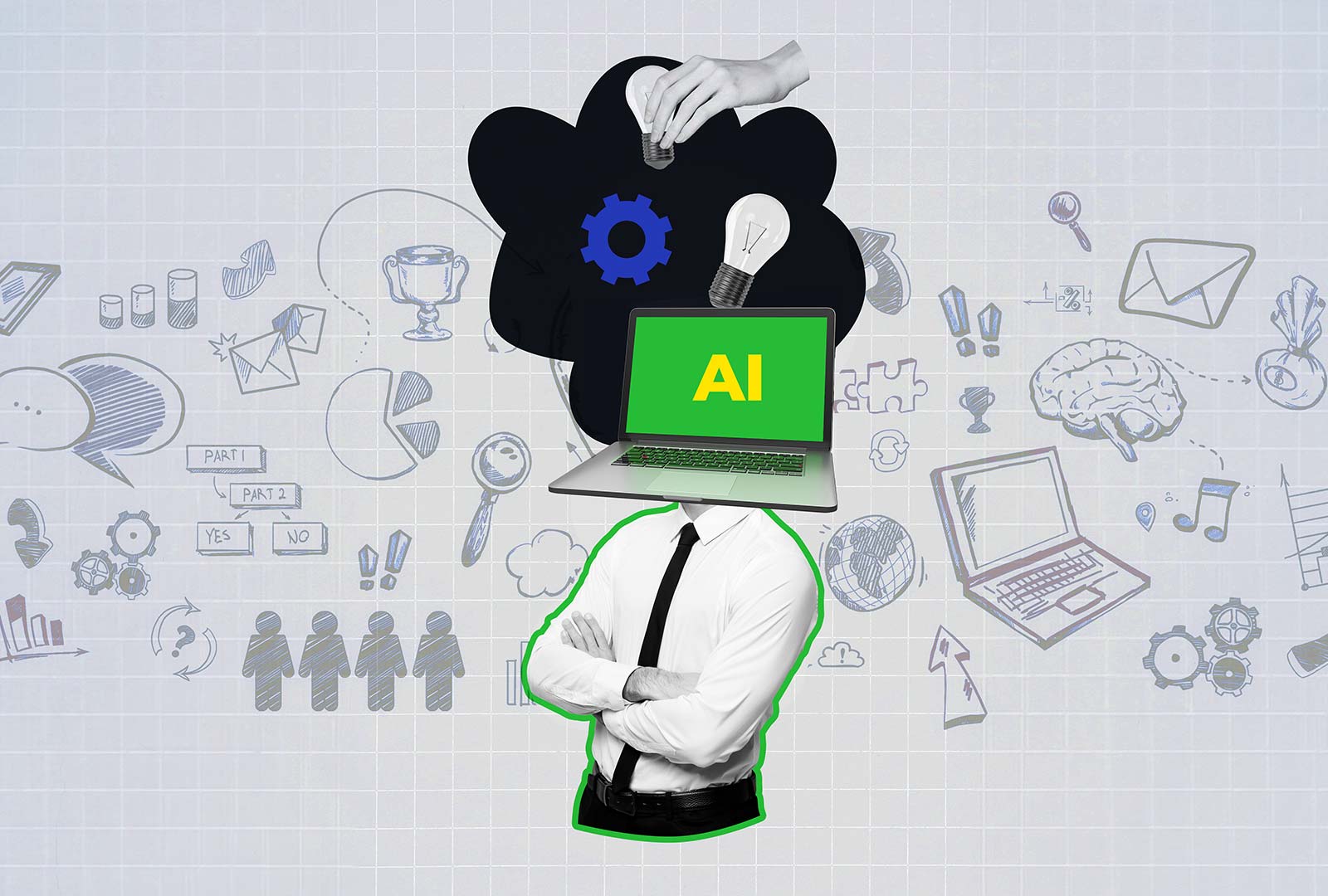
Not a day goes by without somebody asking me about the implications of AI in the advertising industry. The ripples in our space are real, and growing. Early days, but the pioneer impacts have been to efficiency in our space; Writing more copy, creating more content, adding more prompted video, infusing more data into ad buying, and driving future intelligence post-buy.
“More” has been the theme on the production side of the business, where assets are created for distribution. Thematically, this has been an enormous benefit to advertisers, allowing for production to increase without a net increase in costs. Where you achieved two videos per month before, now you can squeeze out three for the same budget. Blogs, reels, statics can all be extended with the help of AI. And that’s before we talk about the power of AI agents to ignite campaigns with automated outreach.
And yet, so what?
As excited as we are to execute on more creative for the same money (sarcasm), I am much more interested in how the creative should be shaped for an AI-enabled audience. Nobody is having this conversation in a meaningful way. It’s time to focus on the AI-enabled consumer.
The mind of the consumer has NOT changed…it is still bombarded with the same 5000+ marketing messages on a daily basis. The mind still does what Malcolm Gladwell called ‘thin slicing’ or simply put, making quick, accurate judgments or find meaningful patterns using very limited information. This process happens in seconds, and consuming ad content is no exception.
If you have an established brand, those milliseconds are used for RECOGNITION. “Ah yes, this is Hodge Toyota because I recognize the song, the colors, the talent, the tagline, the call to action.” Established brands have trust, and require little to no research to gain familiarity. Everybody knows that Nike makes good shoes. Nobody knows what Sophie’s Lemon Hustle is (new brand that I just made up)…so more of the ad or spot must be dedicated to education and brand promise.
In either case, established or fledgeling brand, the consumer is going to file the experience in seconds in one of three buckets:
1) This is NOT for me.
2) This is exactly for me.
3) I have no idea if this is for me or not.
The 2nd and 3rd categories, that’s where the AI-enabled consumer may or may not initiate a query for further discovery. In the Hodge Toyota example, if the consumer sees their dream 4Runner in an ad, and it feels exactly for them, what action will they take? Similarly, if the same consumer sees the Hodge Toyota ad but for a Prius and not a 4Runner, what action may they take?
Historically, If the creative is strong enough to pique interest, the consumer would make themselves known to the retailer by becoming a handraiser: they would have indicated interest by making a call, submitting a request for quote, or driving to the retailer on the spot or in the days/weeks ahead. That’s conversion. Post the conversion activity, some exchange of information or needs analyis is initiated, often with the consumer relying on the retailer to fill in some important blanks about product availability, price, payment, delivery, optionality, etc.
What’s happening now, with the AI-enabled consumer? Assume the creative has piqued their interest, what action are they taking? Research. The AI-enabled consumer is going to satisfy their remaining curiosities as much as possible before revealing themselves to the retailer.
Herein lies the massive, under-discussed opportunity. If the consumer is going to deploy AI to round out their knowledge base about the product OR the seller, the most powerful thing we can do is to prompt the prompt.
What do I mean by prompt the prompt? I’d use the sloppy analogy that we have all heard a few times, that a trial attorney is never going to ask a question that they themselves do not know the answer to. A good trial attorney knows the destination before beginning the journey, as they have plotted out a series of thoughtful questions to reach that destination.
As an advertiser, you know that your service/business has unique strengths and weaknesses. There are things that truly set your offering apart, and others that don’t position you to win every joust. If you’re honest, you’ll embrace this.
Wouldn’t in be great if, after showing a consumer your compelling ad, that they took path of your choosing on the research they are about to do? Is it possible to guide the consumer in this way?
Yes, and it’s called prompting the prompt. I’ll revisit the Hodge Toyota ads to continue the example, as this retailer has a STRONG selling proposition for achieving tops in customer satisfaction and with the Spanish-language market alike. If these are the two strongest pillars to their brand, either the voice in the ad or the copy on the screen will invite the prompts:
“Do we make our customers happy?”
“What does it take to be number one in customer satisfaction?”
“Where can you find a retailer that speaks your language?”
These prompts are limitless, and guide the consumer to the next step that YOU want them to take. You’ll want them to take this step because, like the trial attorney, you know the answer they are going to get. You establish credibility by asking open ended question about yourself and letting the AI-enabled consumer get that glowing answer on their own. Often from a 3rd party.
This allows advertisers to play to their strengths. But that’s not where it ends. If you prompt the prompt, you can bolster your chances of a positive result by incubating the answers. Incubating? Yes!
Incubating is building/growing a body of content that supports your strongest attributes. both on your website and off. These breadcrumbs (dedicated web pages, social video shorts, blogs. reviews, articles, press releases. tagged photos) build a body of evidence. A body of evidence is likely to be trusted to create a CITATION when the AI-enabled consumer goes to Grok (best in breed, BTW) or Claude or Co-Pilot. Getting a citation is the holy Grail.
When the AI tells your customer that you rock (or perform at the level you intimated with a question), you win. Improving your chances with the AI-enabled consumer is a 4 step process:
1) Identify your greatest credible strength(s), not who you WANT to be but who you ARE.
2) Incubate against those strengths- create content to scatter far and wide that supports the strogest core attributes
3) Creative- creative planning should include prompts for the consumer- don’t make them think too much, their interest is piqued, what do YOU want them to ask next?
4) Execute and Evaluate- the metrics are simple:
Are you getting citations?
Are you getting traffic or sales (eCommecre) as a result of citations?
Is your traffic to your website on the rise as a result?
If this type of planning isn’t going into your advertising, let me write a prompt for that:
“What’s the best Dallas Ad Agency?”
We’ll see you on the other side of that prompt.
Thanks for checking out our blog—we hope you found it helpful! To learn more about our agency services, give us a call at 972.243.2211 or contact us today to start the conversation.