
If you think online reputation management is just about dealing with the occasional disgruntled customer on Yelp, you are missing the massive risk facing your bottom line. According to BrightLocal and Wiser Review 2026 data, 97% of consumers read online reviews before making a local purchase decision. That means your brand’s search footprint is actively deciding whether you win or lose new business every single day before a prospect ever speaks to your sales team.
Whether you are currently staring at a frustrating one-star review that hit your search results this morning or trying to build an aggressive defensive barrier around a growing national brand, control is the only strategy that works. A single unmanaged negative link will actively bleed revenue.
This deep-dive strategic blueprint breaks down the exact corporate mechanisms required to protect your digital presence. You will get the raw 2026 data shaping buyer behavior, a clear step-by-step implementation framework, and an honest assessment of when to leverage professional agency support to dominate your market footprint.
Quick Summary: Online reputation management is the strategic practice of monitoring, influencing, and controlling a brand’s digital footprint across search engines, review platforms, and social media channels. In 2026, it is a critical revenue driver because 97% of consumers analyze online feedback before buying, making public digital sentiment a primary factor in customer acquisition and corporate enterprise value.
Key Takeaways
- Online reputation management spans review tracking, search result control, and active crisis mitigation.
- One negative first-page search result can immediately cost your business 22% of potential customers.
- A single-star drop in your rating typically triggers a 5% to 9% revenue decline.
- Sixty-nine percent of modern consumers expect brands to answer reviews within 24 hours.
- Optimized Google Business Profiles generate 70% more visits than incomplete digital listings.
- Sixty-two percent of buyers are actively worried about encountering AI-generated fake reviews.
- Hire specialized agency support when negative search results actively suppress your sales pipeline.
What Is Online Reputation Management?
Online reputation management is the process of actively monitoring, shaping, and controlling how a business or individual is perceived across the digital landscape. It involves deploying targeted strategies to highlight positive content, mitigate the impact of negative search results, and ensure that public digital touchpoints accurately reflect a brand’s actual value.
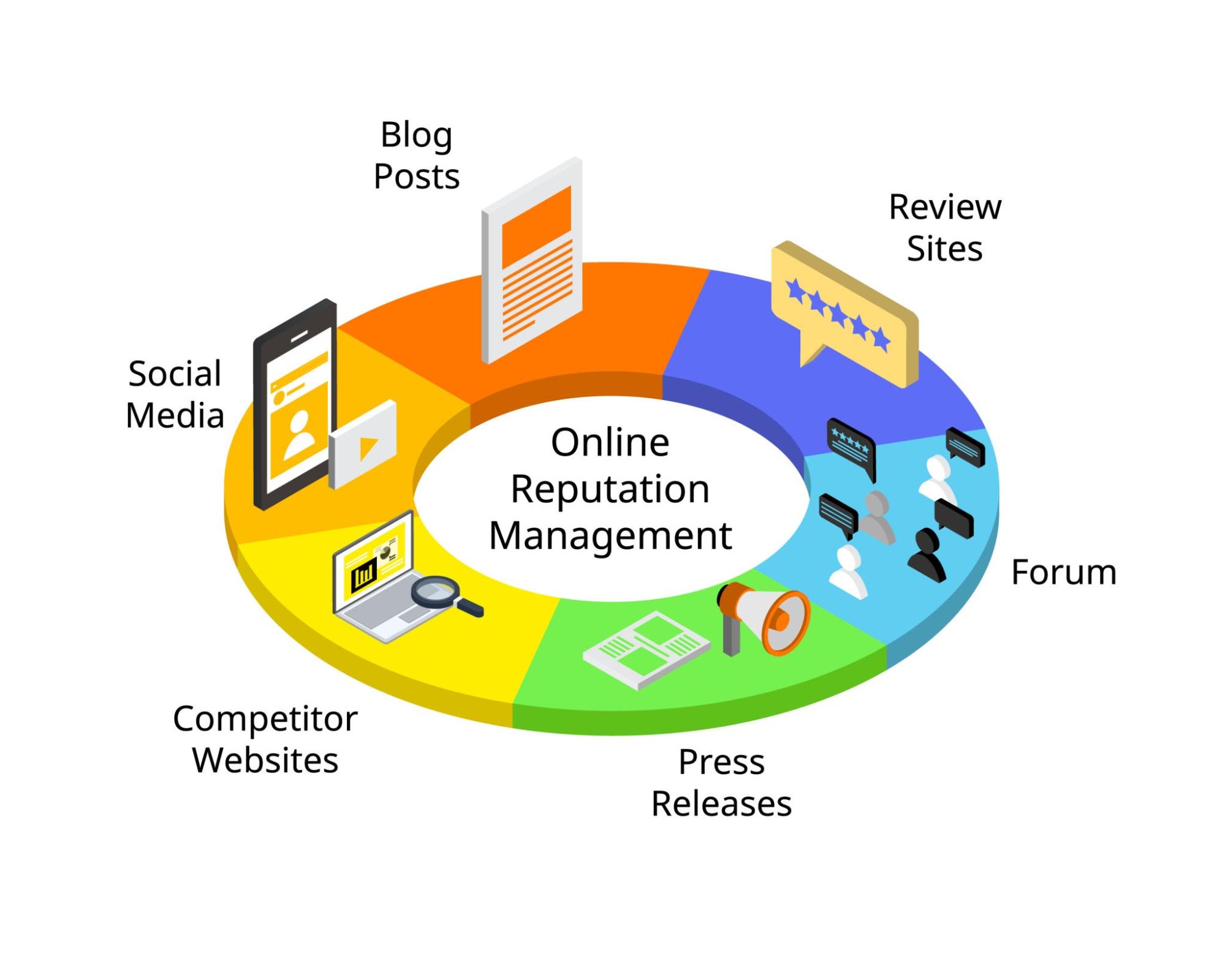
In everyday agency practice, an effective strategy does not rely on a single channel. It requires a holistic framework that actively manages four distinct digital arenas:
- Review Platform Ecosystems: Tracking, generating, and responding to customer feedback on platforms like Google, Yelp, and industry-specific directories.
- Search Engine Visibility (SERP): Engineering the first page of Google search results to ensure positive, owned assets outrank negative or irrelevant links.
- Social Media Sentiment: Monitoring brand mentions, direct comments, and viral threads across platforms to address public concerns in real time.
- Earned Media and Public Content: Managing digital press releases, guest articles, and online publications that shape broader public perception.
Why Online Reputation Management Matters More in 2026
The digital environment has shifted from a casual research tool into a high-stakes ecosystem defined by intense consumer vigilance. According to the BrightLocal Local Consumer Review Survey 2026, 41% of consumers now ‘always’ read reviews before choosing a local business, which is a massive jump from the 29% recorded in 2025. . Buyers are no longer browsing occasionally; they are actively investigating your company before making any commitment.
At the same time, the rise of automated content tools has made consumers incredibly skeptical of the information they find online. Data shows that 62% of consumers are deeply concerned about AI-generated fake reviews (Wiser Review 2026). Because buyers are on high alert for manipulation, building a transparent online reputation that feels authentic is absolutely critical to winning trust.
Ultimately, these factors directly influence corporate valuation. Brand reputation is estimated to represent 30-40% of a company’s total enterprise value (Wiser Review 2026). Protecting your digital footprint is no longer just a minor marketing tactic; a proactive reputation management strategy is a fundamental requirement for safeguarding your organization’s core financial worth.
Online Reputation Management Statistics Every Business Should Know
Understanding the numbers behind digital sentiment is the first step toward building a resilient brand reputation management framework. The data shows a direct, quantifiable link between public trust, search visibility, and corporate revenue.
| Statistic | What It Means for Your Business |
| 97% of consumers read online reviews before a local purchase (BrightLocal / Wiser Review 2026). | Digital feedback is now a mandatory checkpoint in nearly every modern buyer’s journey. |
| 88% of consumers trust online reviews as much as personal recommendations (Wiser Review 2026). | Strangers on the internet carry the same trust equity as close friends and family members. |
| 57% of consumers will not consider a business with a rating under 4 stars (BrightLocal 2026). | A sub-4-star rating instantly disqualifies your business from more than half of your potential market. |
| 73% of consumers only trust reviews written in the last month (BizIQ / Wiser Review 2026). | Review velocity and recency matter just as much as your overall historical volume. |
| 22% loss of potential customers from a single page-one negative review (Wiser Review 2026). | Unmanaged negative search results create an immediate, visible leak in your sales funnel. |
| 35% more revenue for businesses responding to reviews at least 25% of the time (WifiTalents 2026). | Active engagement on public listings directly correlates to higher top-line growth. |
| 69% of consumers expect businesses to respond to reviews within 24 hours (Passive Secrets 2026). | The window to address feedback is exceptionally short; speed is a critical trust signal. |
| 70% of job seekers will not apply to companies with poor reviews or negative press (Newmedia 2026). | Your online footprint dictates your ability to recruit and retain top-tier talent. |
According to data compiled by Wiser Review 2026, a one-star drop in rating typically causes a 5-9% decrease in annual revenue, proving that digital perception is a direct driver of corporate financial health.
When you connect these data points, it becomes clear that brand reputation management cannot be treated as a reactive crisis budget line item. The correlation between consumer trust and financial survival is absolute. If a sub-4-star rating eliminates 57% of your prospects according to BrightLocal’s 2026 survey, your paid advertising campaigns are working twice as hard to convert half as many people.
Furthermore, the operational speed required by modern consumers adds another layer of complexity. With Passive Secrets 2026 tracking a strict 24-hour response expectation for 69% of buyers, reputation management requires dedicated daily workflows rather than monthly check-ins. Defending your digital footprint is an ongoing investment that directly impacts both short-term sales conversions and long-term enterprise valuation.
Core Elements of a Strong Reputation Management Strategy
A resilient digital footprint is never built by accident. It requires a deliberate, multi-layered strategy that proactively shapes public perception across every major online channel. To protect your market share, your brand must execute consistently across four foundational pillars.
Review, Monitoring and Response
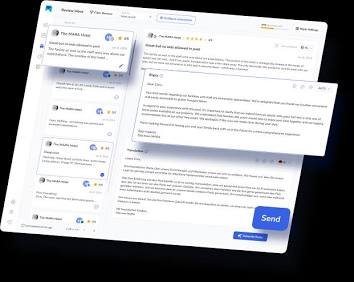
You cannot manage what you do not actively track. While Google is undeniably the primary marketplace footprint, consumers routinely check an average of 6 review sites before choosing a business BrightLocal 2026. A robust tracking framework must aggregate alerts from Google Business Profile, Yelp, Facebook, and niche industry directories like Houzz, TripAdvisor, or Avvo to ensure no piece of feedback goes unnoticed.
Speed is a critical trust differentiator. Data shows that 69% of consumers expect businesses to respond to reviews within 24 hours (Passive Secrets 2026). When handling a negative review, the goal is to defuse the situation publicly while moving the resolution privately.
- The De-escalation Angle: Acknowledge the customer’s frustration directly without admitting fault or getting defensive. State clearly that their experience does not align with your operational standards.
- The Offline Pivot: Provide a direct phone number or a specific email address (e.g., resolution@yourbrand.com) and the name of a senior manager to handle the issue out of the public eye.
- The Resolution Update: Once the issue is resolved offline, gently prompt the customer to update their public review, turning a negative touchpoint into a powerful testament to your customer service.
Search Result and Content Management
Your branded search results serve as your digital front door. When a prospect types your company name into Google, what they see on that very first page dictates their next move. This is a high-stakes real estate battle: the #1 Google search result captures 27.6% of all organic clicks (ReputationX 2026), and traffic drops off precipitously as you move down the page.
If you leave your search results to chance, a single piece of negative press or an outdated third-party forum post can easily hijack your top rankings. The most effective defense is a proactive, aggressive content strategy designed to crowd out unfavorable links with highly optimized, authoritative assets that you own and control.
- Owned Web Properties: Build out dedicated microsites, detailed case study subdomains, and comprehensive employee bios optimized for your brand name.
- Strategic Digital PR: Regularly distribute high-quality press releases through authoritative syndication networks to secure positive media placements that naturally rank high on page one.
- Active Web 2.0 Profiles: Claim and deeply optimize secondary profiles on high-authority platforms like LinkedIn, Crunchbase, Medium, and YouTube to push down unwanted links.
Social Media Reputation Management
Social media is no longer just a megaphone for broadcasting marketing messages; it is an active listening post. Monitoring your brand reputation requires looking far beyond the comments section on your own official profiles. You must actively track untagged brand mentions, industry keywords, variations of your product names, and viral discussion threads across channels like X, Reddit, Instagram, and TikTok.
Social media sentiment frequently acts as the true top of your marketing funnel. It heavily influences how consumers perceive your organization before they ever think to look at a traditional review site or complete a purchase.
- Real-Time Listening: Deploy social listening tools to catch trending sentiment, community complaints, or escalating threads before they snowball into larger public issues.
- Human Engagement: Avoid cold, automated replies. Respond to user feedback with an authentic, helpful human voice that matches your brand personality.
- UGC Amplification: Actively highlight positive user-generated content (UGC), customer shoutouts, and organic testimonials to build a community-backed wall of digital trust.
Crisis Management and Damage Control
Every business will eventually face negative feedback, but there is a massive operational difference between managing a single bad review and navigating a true public relations crisis. A reputation crisis, whether it stems from a viral customer complaint, a public data incident, or severe executive missteps, presents an immediate threat to your balance sheet.
According to Wiser Review 2026 data citing PowerReviews/ExplodingTopics, three or more visible negative reviews on page one of search results increase potential customer loss to 59%.
When a crisis hits, trying to bury the information or issuing defensive, over-lawyered statements will only fuel the fire. The core principle of effective crisis control is to communicate with radical transparency, taking immediate accountability for the situation while outlining the concrete steps your team is implementing to fix the issue permanently.
- Establish a Clear Chain of Command: Appoint a single spokesperson and halt all automated marketing messages immediately to avoid sounding tone-deaf.
- Acknowledge the Issue Instantly: Do not wait for a perfect answer before speaking publicly; communicate what you know immediately and state when updates will follow.
- Document the Remediation: Publicly share the operational changes, internal audits, or structural updates your company is making to guarantee the error never happens again.
How to Improve Your Online Reputation: A Step-by-Step Approach
Building a resilient digital presence requires transitioning from a reactive posture to a proactive framework. If you want to systematically improve online reputation metrics and convert more search traffic into revenue, you must implement a structured, repeatable operational process.
- Audit Your Existing Digital Footprint: You cannot fix what you have not mapped. Begin by searching your brand name across major search engines in a private browsing window to see exactly what a prospect encounters on page one. Pay close attention to your Google Business Profile, as optimized profiles receive 7x more clicks and 70% more visits than incomplete digital listings (Newmedia 2026).
- Build a Proactive Review Generation Funnel: Unhappy customers are naturally motivated to post, while satisfied clients need a gentle nudge. Build an automated system that texts or emails your customers immediately after a successful transaction, asking for their transparent feedback. Displaying these verified reviews on your website can increase conversion rates by up to 270% (Wiser Review 2026).
- Establish a Daily Review Response Routine: Never leave a customer hanging, regardless of their sentiment. Appoint a team member to monitor your core listings daily and respond to all feedback within a strict 24-hour window to satisfy consumer expectations. Thank positive reviewers for their specific notes, and calmly address negative remarks with a direct path to an offline resolution.
- Publish a Steady Stream of Authority Content: Dominate your branded search results by consistently producing high-value, optimized assets on channels you own. Regularly publish comprehensive case studies, detailed technical guides, and strategic company updates on your blog and main social channels. This fresh content naturally builds search authority, slowly pushing outdated or unfavorable third-party links down the rankings.
- Deploy Continuous Digital Listening Tools: Stop relying on manual searches to figure out what people are saying about your brand online. Set up automated mention alerts for your company name, executive team, unique product lines, and even your closest competitors. Catching an untagged comment or forum thread early allows you to join the conversation and correct misinformation before it spreads.
- Draft an Emergency Crisis Protocol: Do not wait for a full-scale PR emergency to figure out who has the passwords to your corporate social media accounts. Write a basic internal checklist that details who needs to be notified during a crisis, who will draft official statements, and how to instantly pause scheduled promotional campaigns. Having a clear blueprint prevents chaotic, defensive public reactions that cause deeper brand damage.
DIY Reputation Management vs. Hiring ORM Services
Managing how your brand is perceived online requires a realistic look at your internal resources. While smaller operations can handle basic tasks internally, growing mid-market companies and enterprise brands often find that manual monitoring quickly becomes overwhelming.
| Factor | DIY Approach | Professional ORM Services |
| Time Investment | Heavy daily manual checking by internal staff. | Entirely outsourced to a dedicated strategy team. |
| Tools & Tech | Limited to free Google Alerts and manual searches. | Enterprise listening software and sentiment tracking. |
| Crisis Speed | Reactive, often delayed by internal approvals. | Proactive, 24/7 monitoring with immediate response protocols. |
| Cost Structure | Low direct software costs; high internal labor strain. | Fixed monthly agency retainer with clear ROI tracking. |
When It’s Time to Hire a Reputation Management Agency
Every business reaches an inflection point where managing digital sentiment internally breaks down. If your team is struggling to keep pace with your digital footprint, look for these specific operational triggers:
- Multi-Location Complexity: Managing unique review funnels, local search rankings, and regional feedback across 5, 10, or 50 separate geographic locations becomes statistically impossible without specialized enterprise infrastructure.
- An Active PR or Search Engine Crisis: If your first page of Google search results is actively hijacked by negative press, viral complaints, or legal disputes, you need an aggressive, technical brand reputation strategy to engineer a suppression campaign.
- A Severe Hiring and Recruitment Bottleneck: When your human resources team reports that high-tier job candidates are turning down interviews because of negative employee reviews online, your footprint is directly throttling your company’s talent acquisition.
- Zero Internal Bandwidth: If your marketing coordinator is trying to handle social media creation, paid ad management, and review responses simultaneously, critical alerts will eventually slip through the cracks, leaving you exposed to unmanaged digital liabilities.
Deploying professional ORM services ensures that your search engine presence is actively defended by specialists, leaving your internal team free to focus on running core business operations.
Why Trust Miller Ad Agency’s Approach to Reputation Management
For over 40 years, Miller Ad Agency has been the trusted creative and digital powerhouse in Dallas, engineering full-service advertising campaigns that build, scale, and defend market leaders. Unlike single-service digital vendors that treat online sentiment as an isolated tech task, we understand that public perception is deeply intertwined with your entire marketing architecture. We bring deep, decades-long experience across high-stakes industries including automotive dealership groups, regional healthcare networks, national retail brands, and multi-location home services companies. Through our specialized automotive marketing solutions, we help tier-1 and tier-2 dealerships actively balance inventory turnover with a clean local reputation footprint.
Our team approaches your digital footprint as an active layer of your broader brand strategy, recognizing that a brilliant paid media or SEO campaign is completely neutralized if your search results are compromised. A local HVAC company or medical practice faces immediate pipeline damage from a single unresolved review, whereas a national brand requires a complex, multi-layered suppression strategy. Our work with DFW home services leader A#1 Air demonstrates how scaling lead conversion requires protecting local search visibility while simultaneously reducing customer acquisition costs.
Because we handle your creative, media buying, and search positioning under one roof, we ensure your defensive reputation plays work in perfect harmony with your growth campaigns rather than in a disconnected vacuum.
Accountability at Miller is rooted in hard performance metrics, not vague promises of “improved sentiment.” We build transparent dashboarding frameworks that track the needle-moving indicators that impact your bottom line: review velocity, localized search visibility, review response times, and historical star rating trends. By grounding our tactical execution in clear financial benchmarks, we transform public feedback from an operational headache into a measurable driver of conversions and enterprise value.
Frequently Asked Questions
What is online reputation management?
Online reputation management is the continuous strategic process of monitoring, influencing, and controlling what prospective buyers see when they search for your brand online. It ensures that public digital touchpoints such as search engine results, social media mentions, and third-party review platforms accurately reflect your actual enterprise value.
How much does it cost to hire ORM services?
The cost of professional ORM services varies widely depending on your business size, location count, and the severity of any active search crises. While basic automated monitoring tools carry minimal software costs, an aggressive brand reputation strategy managed by a full-service agency typically operates on a monthly retainer built around your specific technical suppression and content generation needs.
Can you remove a negative review from Google?
You cannot directly delete a negative Google review simply because you disagree with a customer’s version of events. Google will only remove a review if it provably violates their strict platform content policies, such as containing hate speech, harassment, explicit conflicts of interest, or clear signs of automated fake engagement.
How long does it take to improve online reputation?
Fixing an unmanaged digital footprint is a long-term engineering effort rather than an overnight fix. While accelerating your review response times can happen within 24 hours, actively suppressing negative page-one search results or shifting your overall historical star rating requires continuous content publishing and review velocity over three to six months.
What is the difference between reputation management and PR?
Public relations focuses primarily on broadcasting earned media, press releases, and corporate messaging to shape broad public awareness. Online reputation management operates at the bottom of the funnel, technically optimizing search results and review profiles to control exactly what a user encounters when they are on the verge of making a buying decision.
How do I respond to a negative review the right way?
The optimal approach is to remain entirely professional, acknowledge the customer’s frustration, and instantly pull the conversation offline. Provide a direct phone number or senior executive email address to handle the dispute privately, ensuring prospective buyers see that your brand handles operational errors with speed and accountability.