
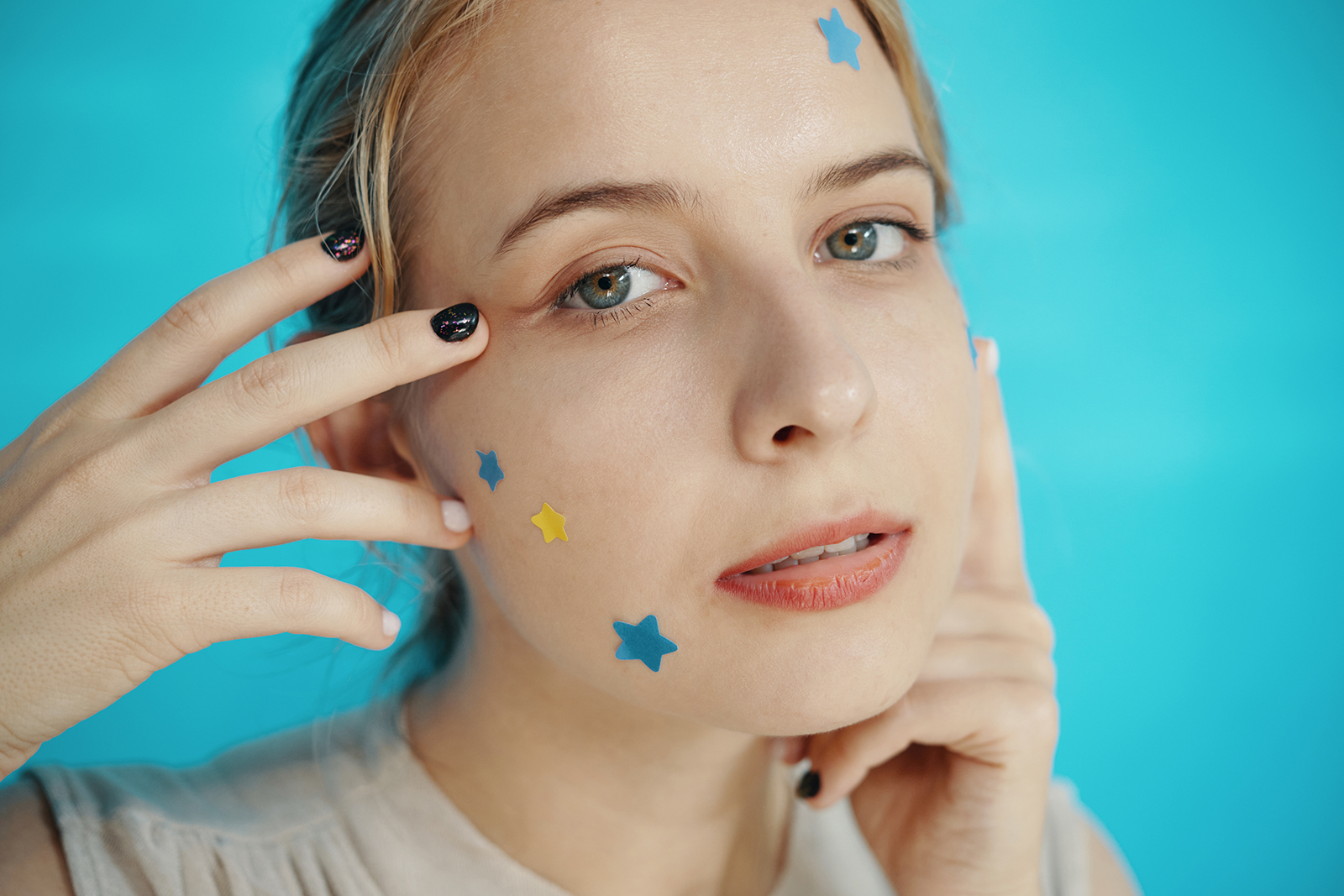
The brand Starface, first launching in 2019 and rising to fame during the 2020 Covid-19 pandemic, is a prime example of successful branding to a Gen Z audience.
What is Starface? Pimple Patches?
Starface is a skincare brand most well known for their signature hydro-stars, brightly colored pimple patches. Pimple patches are specialized bandages made out of hydrocolloid, a type of bandage originally invented as a first aid tool, that draw out fluid and are often used to treat burns. Pimple patches originated in Korea and began to appear in the American market in the early 2010s.
How These Patches Disrupted the Market
Before Starface, acne products’ main focus was discretion. Hide your blemishes with makeup, shrink it with a cream, or take this medication to clear your skin. Hydro-stars flip the whole industry upside down; they invite the consumer to embrace their acne. The brand reduces the shame associated with having pimples by encouraging people to decorate and celebrate their imperfections. This messaging resonated with Gen Z, especially during the global pandemic, when people felt more isolated and depressed.
Keys to Success
Beyond having an innovative product, Starface excelled in their marketing tactics. From product design to brand tone, all the way across social media, it’s out of this world.
Youthful Design
When examining anything Starface, whether it’s the packaging or the promotional material, the vibrant and bold colors are the first things that stand out. They’re eye-catching and graphic, which appeals to Gen Z’s value of creativity.
Another part of the brand tone that appeals to Gen Z is their relaxed use of language. Across their website, they only use lowercase letters and often use common internet abbreviations (for example, using ‘ur’ instead of ‘your’ and ‘rly’ instead of ‘really’). Their messaging is lighthearted, cutesy, and humorous—it doesn’t take itself too seriously.
Social Media
The brand and Gen Z have a major thing in common—they’re both all over TikTok and Instagram. Hosting a blend of meme-cultured-inspired content, user-generated content, and influencer collabs builds a strong connection with their audience. They invite users to share how their product aids in their journey of self-expression.
In 2022, the brand hosted a competition on X in which they allowed fans to submit posts to be featured on a billboard, one in New York City and the other in Los Angeles. This prompted a lot of buzz online across all platforms. Today, the brand sits at 654k followers on Instagram and 3.2m on TikTok.
Celebrities and Pop Culture
Starface Hydro-Stars have been seen on a number of celebrities. Hailey Bieber, Justin Bieber, Willow Smith, and Florence Pugh have all collaborated with the brand. This increases the brand’s credibility and awareness in the Gen Z market and boosts the idea that the patches aren’t just a skincare product; they’re a fashion statement. To emphasize that point—the brand even walked the runway in the 2026 New York Fashion Week.
In addition to celebrity partnerships, Starface has also collaborated with recognizable pop culture brands popular among the Gen Z audience. Limited edition product releases featuring Hello Kitty, Spongebob, and Snoopy all generated a buzz online. These limited-time products create a sense of exclusivity and foster community and competition surrounding the online release.
Conclusion
Gen Z audiences want to feel personally connected to a brand. Authenticity, humility, and genuine positivity are what make Starface strike a chord with a younger crowd. Be bold, be real, and be creative—that’s what makes Gen Z listen.
Thanks for checking out our blog—we hope you found it helpful! To learn more about our agency services, give us a call at 972.243.2211 or contact us today to start the conversation.