
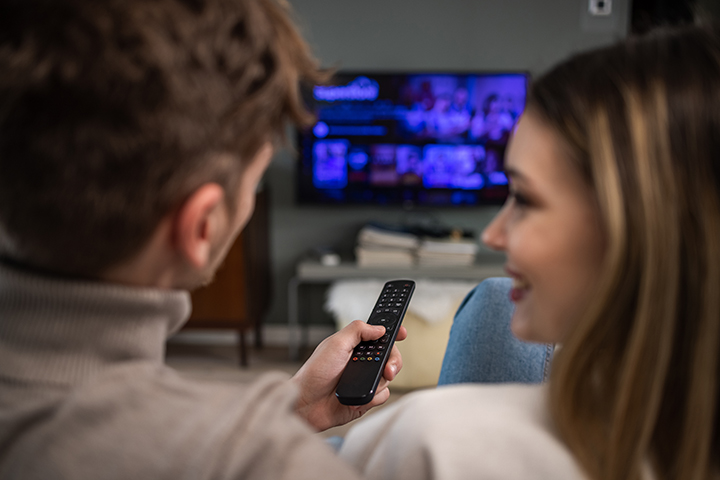
The world of video consumption has changed more in the last three years than in the previous thirty. In 2026, the question isn’t just “should I run a TV ad?” but “where exactly is my audience sitting?” Whether they are watching the local news on a big screen or streaming a series on a tablet, the impact of a well-placed video ad is undeniable. However, to maximize your ROI, you have to understand the specific strengths of traditional television advertising versus the precision of digital tv advertising.
Navigating between traditional broadcast TV and Digital TV in the advertising world. Do you still need both? The answer is, if you can afford it, yes! Sometimes the market size makes that impossible, try having a small budget in Houston, Texas for example, So let’s start at the beginning and explain the differences. Broadcast TV and digital TV represent different methods of delivering television content, and this distinction affects advertising strategies in several ways:
Traditional vs Digital TV Advertising Comparison
To help you visualize the choice, we’ve broken down the core metrics that define both platforms. This comparison is vital for businesses trying to decide between broad reach and data-driven precision.
| Feature | Traditional Broadcast TV | Digital TV (Streaming/OTT) |
| Primary Goal | Mass Brand Awareness | Targeted Conversions & ROI |
| Reach | Broad Local/National | Niche & Segmented |
| Data & Tracking | Estimated Ratings (Nielsen) | Real-time Analytics & Clicks |
| Targeting | Program & Time Slot | Behavior & Demographics |
| Ad Format | :15, :30, :60 Spots | Interactive, Skippable, Native |
Traditional Television Advertising: The Foundation of Trust
Broadcast TV is transmitted over the airwaves via terrestrial signals. Viewers receive these signals using an antenna and a traditional TV set, a cable provider or even a streaming service and choose to view their local networks. Broadcast TV generally reaches a broad audience, including those who may not have cable or internet access. It’s particularly effective for reaching mass-market demographics. One of the negatives is that ad targeting is less precise. Advertisers can select channels and time slots, but they can’t target specific demographics with the same granularity as digital methods. Ads are typically traditional :15 or :30-second spots. Creative formats are usually constrained to TV’s visual and auditory standards. Metrics include viewership ratings and broad demographic data. Measurement can be slower and less detailed compared to digital.
The Psychology of the Big Screen
Despite the rise of mobile, the “Big Screen” in the living room still commands the most attention. When a customer sees your brand on a major network, there is an immediate level of credibility that is hard to replicate. This is why traditional television advertising is often the backbone of major political campaigns and global product launches. It creates a “shared experience” that digital platforms often lack.
The Evolution of Digital TV Advertising
Digital TV includes content delivered via the internet (streaming services, digital platforms) or through digital cable and satellite systems. This also includes on-demand and interactive TV.
Digital TV often targets niche audiences. Streaming platforms and digital channels allow for a more segmented audience reach based on interests and viewing habits. Digital TV allows for highly granular targeting. Advertisers can use data to reach specific demographics, interests, or even behaviors. Retargeting and personalization are common. There is greater flexibility with formats, including interactive ads, video on demand, and even integrated or native advertising. Ads can be tailored to the content and viewer context. Digital TV can offer more detailed and real-time analytics. Advertisers can track impressions, engagement, click-through rates, and more, allowing for better optimization and ROI assessment.
Connected TV (CTV) and the Data Revolution
What makes digital tv advertising so powerful in 2026 is the ability to use “First-Party Data.” If you know your customer is a 35-year-old mother living in a specific zip code who has recently searched for “organic baby food,” you can show your ad only to her. This eliminates “waste” and ensures that every dollar spent is hitting an “in-market” buyer.
Strategic Analysis: Finding Your Media Mix
To summarize the differences, broadcast TV is broader and more traditional, suitable for wide-reaching campaigns with less precise targeting and slower feedback. Digital TV is more targeted and interactive, allowing for detailed data collection and tailored ad experiences, but it may require a more sophisticated approach to navigate the varied platforms and user behaviors.
Each has its own strengths, and ideally advertisers use a combination of both to maximize their reach and effectiveness. One way to look at this is to view broadcast TV as a way to market your brand to the masses, while using digital TV to market more specific retail products (while also branding) to a direct customer or customer group that is more data driven).
Measurement: How to Track Success in 2026
In the past, you had to wait weeks for Nielsen ratings to see if your traditional ad worked. Today, with a hybrid strategy, we can use “Digital Attribution.” By tracking website spikes the moment a broadcast ad airs, we can see the direct correlation between traditional reach and digital action.
Market Specifics: Where to Spend Your Budget
When you are located in a smaller market, it would be smart to do both, and if you can afford to do so in a larger market the same would apply. If you are a smaller business on the edge of a large market, it would be smart to take advantage of a targeted digital TV campaign, maybe be less drilled down in order to take advantage of more branding as well as the retail aspect of digital. The real key is finding the right mix based on your size, location and of course budget. There is still a place for both and there will continue to be so for much longer
The Houston vs. Plano Scenario
Let’s use the Houston example again. If you’re a local plumber in Plano, buying the entire DFW broadcast market is expensive and targets people in Fort Worth who are too far away. Instead, a broadcast TV vs digital TV advertising strategy would suggest using Digital TV to hyper-target Plano zip codes, while using a small, high-impact broadcast buy on a local Plano-focused cable segment to build local fame.
The team at the Miller Ad Agency would love to show you what mix would be the right fit to launch or update your video marketing campaign for your business.
Frequently Asked Question
Which is better: traditional or digital TV advertising?
Broadcast is best for high-level branding and mass trust, while digital TV is superior for precise targeting and tracking direct sales.
What is the difference between OTT and CTV?
CTV is the hardware (Smart TV), while OTT is the service (Hulu/Roku) that delivers content over the internet.
Are digital TV ads skippable?
Many streaming ad formats are non-skippable, leading to higher completion rates than social media video ads.
Is traditional television advertising still effective?
Yes, it remains the most powerful tool for building local authority and reaching a broad, non-segmented audience.